
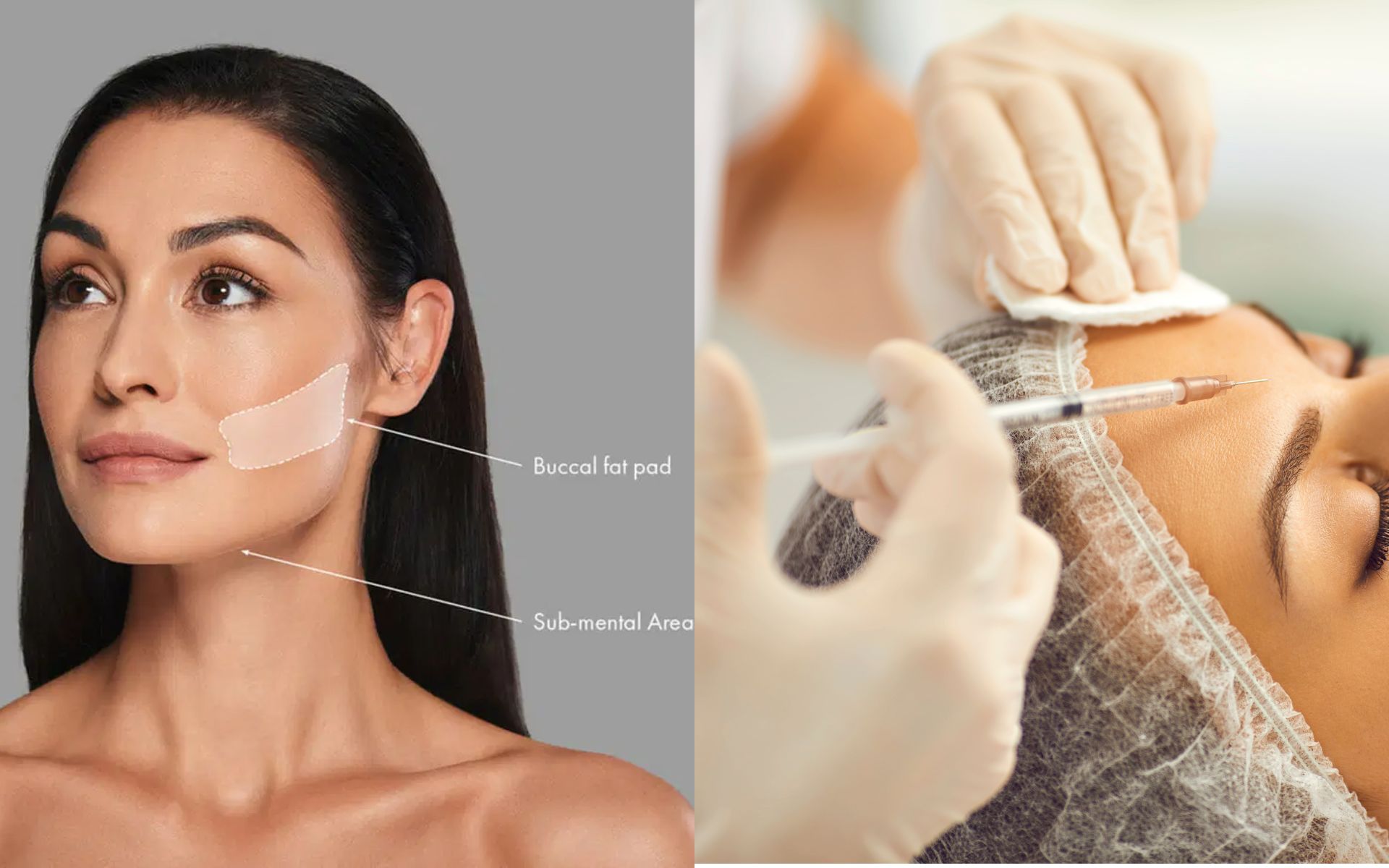
Facial Fat Grafting vs Dermal Fillers: Which Lasts Longer?
Both facial fat grafting and dermal fillers address volume loss in the face, but they differ significantly in longevity, cost structure, and the nature of the material used.
Facial Fat Grafting:
This technique involves harvesting fat via liposuction from another part of the body, purifying it, and injecting it into areas of facial volume loss, such as the cheeks, temples, or under-eye region.
Dermal Fillers:
Fillers are typically hyaluronic acid-based injectable products, offering a non-surgical option for restoring volume with no downtime and immediate, adjustable results.
Benefits Compared:
Facial Fat Grafting Benefits: Uses the patient’s own tissue, eliminating allergic reaction risk Can produce long-term, often permanent results once fat cells establish blood supply – Simultaneously contours the donor liposuction site Cost-effective over time despite a higher upfront surgical cost
Dermal Filler Benefits: No surgery or downtime required – Immediate, visible results Adjustable and partially reversible (hyaluronic acid fillers can be dissolved if needed) – Lower upfront cost, suited to those wanting to “try before committing” to permanent volume change
Longevity Comparison:
Fillers typically last 6–18 months depending on the product and treatment area, requiring repeat sessions. Fat grafting, once fat cells survive the initial reabsorption period (typically 40–60% survival), tends to offer long-term or permanent results.
Which Option Should You Choose?
• Choose fillers if: You want to test a change before committing, have minimal time for downtime, or need a smaller, targeted correction
• Choose fat grafting if: You want a long-term or permanent solution, have adequate donor fat, and are comfortable with a short surgical recovery
Recovery Timeline:
Dermal Fillers: Minimal downtime, possible mild swelling or bruising for a few days.
Facial Fat Grafting: Swelling and bruising at both injection and donor sites for 1–2 weeks, with final results visible over 3–6 months as reabsorption stabilises.
Frequently Asked Questions:
Which option is more cost-effective in the long run?
While fat grafting has a higher upfront cost due to being a surgical procedure, its longevity often makes it more cost-effective over several years compared to repeat filler sessions.
Can fat grafting be combined with fillers?
Yes, some patients use fillers for fine-tuning after fat grafting has settled, particularly for smaller touch-up needs.
Does fat grafting look more natural than fillers?
Both can look natural when performed skillfully; fat grafting integrates with surrounding tissue over time, while fillers offer more immediate, adjustable volume.
Is there downtime after facial fat grafting?
Yes, there is more downtime compared to fillers, typically including swelling and bruising at both the injection and liposuction donor sites for one to two weeks.
Can fillers be reversed if I don’t like the result?
Hyaluronic acid-based fillers can typically be dissolved with an enzyme injection if needed, offering more flexibility than fat grafting.
How much of the transferred fat actually stays long-term?
Generally 40–60% of transferred fat survives permanently, which is why surgeons often slightly overcorrect during the initial procedure.

Post a comment